The humanitarian crisis that is Syria has raised numerous issues for the international community. With an estimated 9,000-15,000 plus civilians killed and injured,[i] and no end in sight, the crisis is testing the very fabric of the United Nations system. The crisis has demonstrated (once again) the inability of the Security Council to fulfill its role within the United Nations paradigm as set forth in Chapter V & VII of the United Nations Charter. It is not as some members of the Security Council have not attempted to act, it is that some permanent members of the Security Council are not acting in the interest of international peace and security but putting their own internal politics primary to that of the international framework.
Chapter V of the United Nations Charter sets out the role of the Security Council within the United Nations paradigm. Article 24 § 1 states that “[i]n order to ensure prompt and effective action by the United Nations, its Members confer on the Security Council primary responsibility for the maintenance of international peace and security…” This responsibility mainly falls upon the five permanent members of the Security Council, “[t]he Republic of China, France, the Union of Soviet Socialist Republics [Russian Federation], the United Kingdom of Great Britain and Northern Ireland, and the United States of America…”[ii] To enact a resolution or to take action (on anything other than a procedural vote) all five permanent members must vote in the affirmative.[iii] If one or more of the permanent members votes against a resolution to take action the item fails.[iv]
The Security Council’s primary role as set out in article 39 is to
determine the existence of any threat to the peace, breach of the peace, or act of aggression and shall make recommendations, or decide what measures shall be taken in accordance with Articles 41 and 42, to maintain or restore international peace and security.
In the matter of Syria, the Security Council has recognized[v] that there is a threat posed by Syria to international peace and security. The Security Council has acted in accordance with its article 39 powers, it has “called”[vi] for the implementation of Kofi Annan’s[vii] peace plan, it has called for an immediate cease fire,[viii] and has implemented, albeit briefly, a observer mission,[ix] all to no avail.
The Security Council under the Charters article 41 and 42 powers has many more options available to them. They have taken none they are authorized to take. Why? Russia and China… While it is nothing new for a permanent member to veto a resolution in support of its own domestic political mandate or to protect an ally, in face of the exceptional loss of life and suffering, it is rare for a State to brazen as to invoke its veto power in face of such international pressure. So why are China and Russia doing this? In short to protect the existing Syria government (which is allied with Russia) and to seemingly prevent the formulation of positive international custom recognizing international action to remove an oppressive regime (China). So to put it colloquially, people are dying to protect Russia’s ally in the region and to protect China’s regime…
The problem is, that under the existing United Nations paradigm, both Russia and China acted within their rights under Ch. V of the U.N. Charter. There is nothing within the Charter that says a State must put the international community before its own domestic politics. This has been the bane of the Security Council since its inception. Indeed the history of the Security Council is more about veto’s than it is about taking action. With the exception of the Korean War (in which the Soviet Union was boycotting the Security Council) and the First Gulf War (in which the Soviet Union was not functioning per se – it was literally and figuratively on its last legs as a collective State). The Security Council was mired in political machinations and infighting predictably with a West v. East flavor. In short, the Security Council doesn’t work.
The fact is that the Security Council is broke, and has been broke since its inception, and as a result international law is in peril. The crisis in Syria is just another proof of the shortcomings of the Security Council and there is no hope on the horizon of any improvement. It would take a whole new Charter system to fix this problem that is the Security Council. While many States would welcome a new international system, there is no way one could be conceivably be created. The international wherewithal and impetus that existed post-world war II that led to the creation of the U.N system no longer exists, there are no colonial powers who may impose their will on the world, for better or worse, to create a system.
So what is the international community to do? I would posit that collective states acting in concert are the solution to the inability of the Security Council to act. While many would posit that NATO’s actions in Kosovo were illegal, they, that is NATO’s, action were the only way the mission would have ever been accomplished and the lives of countless saved. States must take it upon themselves to protect those who cannot protect themselves from tyrants and dictators who put their own political lives ahead of those they are supposed to be protecting. Groups such as NATO must step up and fill the role that is being unfulfilled by the Security Council until such time the Council begins to fulfill its mandate. It is recognized that this is not an ideal solution but neither is it ideal to standby and watch 30,000 people lose their lives or terrorists can access to WMD’s because of political machinations at the UN. Action must be taken and if the Security Council cannot do so then States and international groups must do so.
San Diego is a city in which a school named as San Diego school of the law, and also running and enforcing the law education into that city, it is also a complete student running organizations. The lawyer of that school may help to you in every aspect of your DUI arrested.
John law
According to the John Law the money was a only way to exchange that did not constitute the wealth in itself and that wealth called the national wealth or currency. It is also necessary to state that the great John was born in 21, April 1671 and died in 21, March.1729.
Texas law
Every country has its own taxes law for all the people into there countries or states or nations according to some rules and regulations. The payment of any kind of tax is completely according to the law that is named as taxes or tax law. There is some kind of taxes to know more about the tax like sales tax, property tax, income tax, and business tax are mostly well known taxes. There is also a special department only for the tax transactions in every state or nation especially in the Pakistan the name of the tax office is FBR (Federal Board of Revenue)
New York law
The New York law means any kind of the claims concerned with the city must be filed in the courts which are in the city and also in the State of New York, there is also some schools and institutes for the education for the law in that city and known as the New York law schools.
Law order
The acutely meaning of the law order we can understand in the sense of the law enforcement, it means that any law can enforce somebody to do some works or prevents someone to stay from it. So the enforcement or order of the law can on every body in any nation or state and country.
University law
This thing can be taken in two senses or ways first is a law that is teaching or being educated by the students, and second is the special laws of the university which is important to follow them. There are many law universities or schools in the world mostly famous or well known universities are as like the Harvard law school, New York University of the law and Cambridge University of the law are educating about the law.
Office law
The office law having the same values as some institutes for the law departments or institutes like as we can say that a police station is an office of the law. An administrative of the office law gives the surety that any agency regulation are be fair and clear, it is important, available and legally valid to the people or public.
American law
The American law and the law of the United States have equal importance so these laws consists of many steps of the codified and to unmodified forms of law, from which very important the US constitution for the purpose of the foundation of the federal govt. of the America.
Law England
The law of England is a kind of British law the England law has two basic kinds one is script a law and second is non script a law; basically it is a law of the England a state of the United Kingdom UK.
Indian law
The Indian law presents the system of law which provides the operations of the Indian law. According to the Indian nationality law it is fair that a person can get the citizenship for only single man himself in all over the country.
Pakistan law
The law of Pakistan and the justice commission of the country are the institutions of the Federal Govt. according to the ordinance 115 of 1979, and the head of the commission is chief justice of Pakistan and at least 12 other members are also including the Chief Justice of the supreme court of Pakistan.
Law Canadian
Basically the Canadian law system has its own foundation or basics according to the British common law system, and for having an opportunity of being the former colony or state of the United Kingdom (UK).
Washington law
The Washington law has a great wide range of the sections and the implementations for the people who wants and applies the some acts by force to the other people. For the different type of the atmosphere in the city of the Washington about some its points of the law are known as the law of the Washington.
If the partnership is formed for an undefined time, it ‘is called partnership at will Any partner can dissolve ii at any iimeh by giving the notice. According to partnership at I 1932
“If no provision ii made in the agreement regarding of the partnership, it is called partnership at Partnership at will may be created under the following circumstances -tal
If partnership has been formed for an indefinite period, it is called partnership at will If partnership has been formed for a particular venture and after completing such venture it remains continue, it becomes a partnership.
2. PARTICULAR PARTNERSHIP
If the partnership is formed for a particular object of temjxwary nature, it is called particular partnership. Or” the completion of a particular venture, it comes to an elid Under this no regular business is done. EXAMPLES
Partnership for the constnjclion of a building
Partnership for producing a film.
3 LIMITED PARTNERSHIP
Limited partnership is that in which liability some paitners is limited up to the amount of their caprtf In this partnership, there is at least one partnef who unlimited liability
In Pakistan, this Type of partnership is not foi There is a separate partnership act for it. MAIN FEATURES
LIMITED PARTNER
There is at least one partner who has Ifr , liability
UNLIMITED PARTNER
There is at least one partner who unlimited liability.
NUMBER OF PARTNERS
There are at least two partners or 20 in ordinary business and not more than l( banking business
ADMISSIQNQF NEW PABT\E£
New partners may be admitted in partnership without consent of limited partners ‘”
REGISTRATION
The registration of .this partnership compulsory by law.
Limited partner can transfer his share to any other person with the consent of another partners.
INSPECTION OF BOOKS
Limited partner has a right to inspect the books of accounts.
RIGHTS OF SUGGESTIONS
Limited partner has a right to give to others who manage the business.
PARTICIPATION IN MANAGEMENT
A limited partner cannot take part in the management of the business.; rfj) WITHDRAWAL Of CAPITAL
A limited partner cannot withdraw his capital until he remains in partnership business. (k) SEPARATE LEGISLATION
It is controlled under ihe limited -partnership act 1907 instead of partnership act 1932.
(b)’ The Liability of each partner U limited up to hi capital invested in business.
(c) Capital invested by each partner is not equal.
(d) No partner is allowed to lend anything out of tto joint asset.
(e) The profit or loss is divided among partners 01 Ihe basis of capital invested by them
(0 This type of partnership may be formed betweei or among free and slave persons, Muslims am non-Muslims, men, women and children.
(g) Each partner is the agent of the other.
(h) The agreement in this partnership is flexible
(i) This partnership is practicable in every field ol business.
It is a partnership in which two or more persons d same religion with equal capital are entered into an agreement
FEATURES
(a) In this partnership, all partners contribute tv-amounts
(b) The share of each partner in profit or loss Jl equal
(c) Each partner is an agent and helper of tfF partner.
(d) There is written agreement between partners fr the equality of profit and loss sharing ratio
(e) Each partner has an equal status.
(f) The terms of partnership agreement are m flexible.
SHTRKAT-AL-SAPUI
h is an association of two or more different skilled involved in the operation of a business like , accountant, and labourers etc.
ATURES
a) Skilled persons join together to start this business.
b) The profit is distributed among partners according to the terms of agreement
(c) There rs no capital in this partnership.
(d) The capitalists provide rhe capital.
it is a partnership among reputable persons who to buy goods on credit in order to supply them in the
et
MURES
It is & partnership among reputable persons.
The main object of partnership is to buy goods
on credit and to sell them in the market
No partner invests capital i Each partner is an agent of another. t The profit and loss is shared among the partners
on equal basis
TERMINATION OF PARTNERSHIP
I shall above forms of partnership each partner has a .fe terminate the partnership by giving the notice to
Partnership Is also terminated on the death partner.
PREVIOUSLY, reparation was a concept, now it’s a discussion. We have seen recently where Caricom leaders accepted a 10-point plan for negotiations with the European nations. Among other things, it seeks a formal apology, debt forgiveness, and unspecified financial damages for the persisting “psychological trauma” from the days of plantation slavery. Many whose ancestors were not held as slaves would much rather the topic go away. Unfortunately, we know that just because a topic is difficult or uncomfortable does not mean it should not be dealt with.
Reparation is a principle of law that has existed for many years, referring to the obligation of a ‘wrongdoing’ party to redress the damage caused to the injured party. Prime Minister of St Vincent and the Grenadines Ralph Gonsalves said: “The awful legacy of these crimes against humanity, a legacy which exists today in our Caribbean, ought to be repaired for the developmental benefit of our Caribbean societies and all our peoples.”
Under international law, “reparation must, as far as possible, wipe out all the consequences of the illegal act and re-establish the situation which would, in all probability, have existed if that act had not been committed.” See Corfu Channel Case, (UK v Albania)
The right to reparation is a well-established principle of international law. The International LawCommission affirmed this principle in its 53rd Session when it adopted the draft articles on responsibility of states for internationally wrongful acts. The right is also firmly anchored in international human rights treaties and declarative instruments, some of which are: the Inter-American Convention on Human Rights (Articles 25, 63 (1), and 68); the Universal Declaration of Human Rights (Art 8); the International Covenant on Civil and Political Rights (Arts 2(3), 9(5), and 14(6)). Jurisprudence has also added to the legitimacy that reparation has a place in international law. See ruling of the Inter-American Court of Human Rights in the Velásquez Rodríguez Case, Serial C, No 4 (1989), par 174, also in the Chorzow Factory Case (Ger v Pol), (1928) the Permanent Court of Arbitration opined: “It is a principle of international law that the breach of an engagement involves an obligation to make reparation in an adequate form.”
In 2005, the UN General Assembly sought to codify the norms relating to the right to reparation by adopting the Basic Principles and Guidelines on the Right to a Remedy and Reparation for Victims of Violations of International Human Rights and Humanitarian law. (Resolution 60/147,16/12/2005)
As for the achievement of full ‘restitutio in integrum’, paragraph 8, of Resolution 60/147 mentioned above, provides that the term victim includes those who have individually or collectively suffered harm, and may include the immediate family or dependents of the direct victim and persons who have suffered harm in intervening to assist victims in distress or to prevent victimisation.
For those who argue about precedent in international law, this was clearly adduced by Professor Beckles of the University of West Indies, who noted that the first reparation case was that of Haiti where, under an 1825 ‘agreement’, Haiti was forced to pay 150m gold French francs (about US$21 billion in today’s money) to France. The second historic reparation case occurred in 1834, when slave masters argued that the freeing of enslaved people by British legislation was a violation of their property rights and demanded compensation. Germany paid for the Holocaust. The Americans paid the Japanese for loss of property in World War II (1939-1945). The British recently paid £19.9m in compensation for Kenyans (Mau Mau) who were tortured in the 1950s and 60s rebellion.
In concluding, while slavery was not only legal, it was condoned in the Bible (Leviticus 25:44-46), it is not difficult to argue that, regardless of what the law stated at the time, slavery was a horrible and despicable act against black people. Therefore, for those sceptics who argue that Caribbean people are just looking money, and the Rastafarians want a free ride to parts of Africa, I submit they are misguided.
Amarildo de Souza, a bricklayer living in a Rio de Janeiro favela, was arrested by police in an operation to round up drug traffickers. He was never seen again. De Souza’s disappearance was taken up by protesters in street demonstrations, which were met with a ruthless police response. Normally, de Souza’s story would have ended there, but public pressure led to a police investigation, and eventually to the arrest of 10 police officers, who were charged with torturing and murdering him.
Brazil, one of the largest democracies in the world, is rarely considered to be among the major human rights-violating countries. But every year more than a thousand killings by police – very likely summary executions, according toHuman Rights Watch – take place in Rio de Janeiro alone. The prohibition of extrajudicial killings is central to human rights law, and it is a rule that Brazil flagrantly violates – not as a matter of official policy, but as a matter of practice. Brazil is hardly the only country where this takes place; others include India, the world’s largest democracy, South Africa, the Dominican Republic and Iran. These countries all have judicial systems, and most suspected criminals are formally charged and appear in court. But the courts are slow and underfunded, so police, under pressure to combat crime, employ extrajudicial methods, such as torture, to extract confessions.
We live in an age in which most of the major human rights treaties – there are nine “core” treaties – have been ratified by the vast majority of countries. Yet it seems that the human rights agenda has fallen on hard times. In much of the Islamic world, women lack equality, religious dissenters are persecuted and political freedoms are curtailed. The Chinese model of development, which combines political repression and economic liberalism, has attracted numerous admirers in the developing world. Political authoritarianism has gained ground in Russia, Turkey, Hungary and Venezuela. Backlashes against LGBT rights have taken place in countries as diverse as Russia and Nigeria. The traditional champions of human rights – Europe and the United States – have floundered. Europe has turned inward as it has struggled with a sovereign debt crisis, xenophobia towards its Muslim communities and disillusionment with Brussels. The United States, which used torture in the years after 9/11 and continues to kill civilians with drone strikes, has lost much of its moral authority. Even age-old scourges such as slavery continue to exist. A recent report estimates that nearly 30 million people are forced against their will to work. It wasn’t supposed to be like this.
At a time when human rights violations remain widespread, the discourse of human rights continues to flourish. The use of “human rights” in English-language books has increased 200-fold since 1940, and is used today 100 times more often than terms such as “constitutional rights” and “natural rights”. Although people have always criticised governments, it is only in recent decades that they have begun to do so in the distinctive idiom of human rights. The United States and Europe have recently condemned human rights violations in Syria, Russia, China and Iran. Western countries often make foreign aid conditional on human rights and have even launched military interventions based on human rights violations. Many people argue that the incorporation of the idea of human rights into international law is one of the great moral achievements of human history. Because human rights law gives rights to all people regardless of nationality, it deprives governments of their traditional riposte when foreigners criticise them for abusing their citizens – namely “sovereignty” (which is law-speak for “none of your business”). Thus, international human rights law provides people with invaluable protections against the power of the state.
And yet it is hard to avoid the conclusion that governments continue to violate human rights with impunity. Why, for example, do more than 150 countries (out of 193 countries that belong to the UN) engage in torture? Why has the number of authoritarian countries increased in the last several years? Why do women remain a subordinate class in nearly all countries of the world? Why do children continue to work in mines and factories in so many countries?
The truth is that human rights law has failed to accomplish its objectives. There is little evidence that human rights treaties, on the whole, have improved the wellbeing of people. The reason is that human rights were never as universal as people hoped, and the belief that they could be forced upon countries as a matter of international law was shot through with misguided assumptions from the very beginning. The human rights movement shares something in common with the hubris of development economics, which in previous decades tried (and failed) to alleviate poverty by imposing top-down solutions on developing countries. But where development economists have reformed their approach, the human rights movement has yet to acknowledge its failures. It is time for a reckoning.
Although the modern notion of human rights emerged during the 18th century, it was on December 10, 1948, that the story began in earnest, with the adoption of the Universal Declaration of Human Rights by the UN general assembly. The declaration arose from the ashes of the second world war and aimed to launch a new, brighter era of international relations. It provided a long list of rights, most of which are the familiar “political” rights that are set down in the US constitution, or that have been constructed by American courts over the years. The declaration was not dictated by the United States, however, and showed the influence of other traditions of legal thought in its inclusion of “social” rights, such as the right to work.
The weaknesses that would go on to undermine human rights law were there from the start. The universal declaration was not a treaty in the formal sense: no one at the time believed that it created legally binding obligations. It was not ratified by nations but approved by the general assembly, and the UN charter did not give the general assembly the power to make international law. Moreover, the rights were described in vague, aspirational terms, which could be interpreted in multiple ways, and national governments – even the liberal democracies – were wary of binding legal obligations. The US did not commit itself to eliminating racial segregation, and Britain and France did not commit themselves to liberating the subject populations in their colonies. Several authoritarian states – including the Soviet Union, Yugoslavia and Saudi Arabia – refused to vote in favour of the universal declaration and instead abstained. The words in the universal declaration may have been stirring, but no one believed at the time that they portended a major change in the way international relations would be conducted; nor did they capture the imagination of voters, politicians, intellectuals or anyone else who might have exerted political pressure on governments.
Part of the problem was that a disagreement opened up early on between the US and the Soviet Union. The Americans argued that human rights consisted of political rights – the rights to vote, to speak freely, not to be arbitrarily detained, to practise a religion of one’s choice, and so on. These rights were, not coincidentally, the rights set out in the US constitution. The Soviets argued that human rights consisted of social or economic rights – the rights to work, to healthcare, and to education. As was so often the case during the cold war, the conflict was zero-sum. Either you supported political rights (that is, liberal democracy) or you supported economic rights (that is, socialism). The result was that negotiations to convert the universal declaration into a binding treaty were split into two tracks. It would take another 18 years for the United Nations to adopt a political rights treaty and an economic rights treaty. The International Covenant on Civil and Political Rights and the International Covenant on Economic, Social and Cultural Rights finally took effect in 1976.
As the historian Samuel Moyn has argued in his book The Last Utopia, it was not until the late 1970s that human rights became a major force in international relations. President Jimmy Carter’s emphasis on human rights seems to have been a reaction to Vietnam and the gruesome realpolitik of the Nixon era, but Carter himself was unable to maintain a consistent line. Allies such as Iran and Saudi Arabia were just too important for American security, and seen as a crucial counterweight to Soviet influence. Still, something changed with Carter. His five successors – Republicans and Democrats alike – have invoked the term “human rights” far more frequently than any president before him. It is not that presidents have become more idealistic. Rather, it is that they have increasingly used the language of rights to express their idealistic goals (or to conceal their strategic goals).
Despite the horrifying genocide in Rwanda in 1994, and the civil war in Yugoslavia, the 1990s were the high-water mark for the idea of human rights. With the collapse of the Soviet Union, economic and social rights lost their stigmatising association with communism and entered the constitutional law of many western countries, with the result that all major issues of public policy came to be seen as shaped by human rights. Human rights played an increasingly important role in the European Union and members insisted that countries hoping to join the EU to obtain economic benefits should be required to respect human rights as well. NGOs devoted to advancing human rights also grew during this period, and many countries that emerged from under the Soviet yoke adopted western constitutional systems. Even Russia itself made halting movements in that direction.
Then came September 11, 2001 and the “war on terror”. America’s recourse to torture was a significant challenge to the international human rights regime. The United States was a traditional leader in human rights and one of the few countries that has used its power to advance human rights in other nations. Moreover, the prohibition on torture is at the core of the human rights regime; if that right is less than absolute, then surely the other rights are as well.
The rise of China has also undermined the power of human rights. In recent years, China has worked assiduously behind the scenes to weaken international human rights institutions and publicly rejected international criticism of the political repression of its citizens. It has offered diplomatic and economic support to human rights violators, such as Sudan, that western countries have tried to isolate. Along with Russia, it has used its veto in the UN security council to limit western efforts to advance human rights through economic pressure and military intervention. And it has joined with numerous other countries – major emerging powers such as Vietnam, and Islamic countries that fear western secularisation – to deny many of the core values that human rights are supposed to protect.
Each of the six major human rights treaties has been ratified by more than 150 countries, yet many of them remain hostile to human rights. This raises the nagging question of how much human rights law has actually influenced the behaviour of governments. There are undoubtedly examples where countries enter into human rights treaties and change their behaviour. The political scientist Beth Simmons, for instance, has described the observable impact in Japan and Colombia of the ratification of the Convention on the Elimination of All Forms of Discrimination Against Women. The puzzle is how to reconcile this with the many examples of blatant human rights violations. Saudi Arabia ratified the treaty banning discrimination against women in 2007, and yet by law subordinates women to men in all areas of life. Child labour exists in countries that have ratified the Convention on the Rights of the Child: Uzbekistan, Tanzania and India, for example. Powerful western countries, including the US, do business with grave human rights abusers.
In a very rough sense, the world is a freer place than it was 50 years ago, but is it freer because of the human rights treaties or because of other events, such as economic growth or the collapse of communism?
The central problem with human rights law is that it is hopelessly ambiguous. The ambiguity, which allows governments to rationalise almost anything they do, is not a result of sloppy draftsmanship but of the deliberate choice to overload the treaties with hundreds of poorly defined obligations. In most countries people formally have as many as 400 international human rights – rights to work and leisure, to freedom of expression and religious worship, to nondiscrimination, to privacy, to pretty much anything you might think is worth protecting. The sheer quantity and variety of rights, which protect virtually all human interests, can provide no guidance to governments. Given that all governments have limited budgets, protecting one human right might prevent a government from protecting another.
Take the right not to be tortured, for example. In most countries torture is not a matter of official policy. As in Brazil, local police often use torture because they believe that it is an effective way to maintain order or to solve crimes. If the national government decided to wipe out torture, it would need to create honest, well-paid investigatory units to monitor the police. The government would also need to fire its police forces and increase the salaries of the replacements. It would probably need to overhaul the judiciary as well, possibly the entire political system. Such a government might reasonably argue that it should use its limited resources in a way more likely to help people – building schools and medical clinics, for example. If this argument is reasonable, then it is a problem for human rights law, which does not recognise any such excuse for failing to prevent torture.
Or consider, as another example, the right to freedom of expression. From a global perspective, the right to freedom of expression is hotly contested. The US takes this right particularly seriously, though it makes numerous exceptions for fraud, defamation, and obscenity. In Europe, most governments believe that the right to freedom of expression does not extend to hate speech. In many Islamic countries, any kind of defamation of Islam is not protected by freedom of speech.Human rights law blandly acknowledges that the right to freedom of expression may be limited by considerations of public order and morals. But a government trying to comply with the international human right to freedom of expression is given no specific guidance whatsoever.
Thus, the existence of a huge number of vaguely defined rights ends up giving governments enormous discretion. If a government advances one group of rights, while neglecting others, how does one tell whether it complies with the treaties the best it can or cynically evades them?
The reason these kinds of problems arise on the international but not on the national level is that within countries, the task of interpreting and defining vaguely worded rights, and making trade-offs between different rights, is delegated to trusted institutions. It was the US supreme court, for example, that decided that freedom of speech did not encompass fraudulent, defamatory, and obscene statements. The American public accepted these judgments because they coincided with their moral views and because the court enjoys a high degree of trust. In principle, international institutions could perform this same function. But the international institutions that have been established for this purpose are very weak.
In truly international human rights institutions, such as the UN human rights council, there is a drastic lack of consensus between nations. To avoid being compelled by international institutions to recognise rights that they reject, countries give them little power. The multiple institutions lack a common hierarchical superior – unlike national courts – and thus provide conflicting interpretations of human rights, and cannot compel nations to pay attention to them. That is why, for instance, western countries have been able to disregard the human rights council’s endorsement of “defamation of religion”, the idea that criticism of Islam and other religions violates the human rights of those who practice those religions.
The failure of the international human rights legal regime is, then, rooted in the difficulty of reducing the ideal of “good governance” to a set of clearly defined rules that can be interpreted and applied by trusted institutions. People throughout the world have different moral convictions, but the problem is not entirely one of moral pluralism. The real problem is the sheer difficulty of governance, particularly in societies in the throes of religious and ethnic strife that outsiders often fail to understand. There are many legitimate ways for governments to advance people’s wellbeing and it is extremely hard for outsiders to evaluate the quality of governance in a particular country.
Many human rights advocates respond that even if human rights law does not function as a normal legal system, it does provide important moral support for oppressed people. When the Soviet Union signed the Helsinki Accords in 1975, which required it to respect human rights, various Helsinki committees sprouted in the eastern bloc, which became important focal points for agitation from dissidents. Women’s rights groups in patriarchal countries have drawn inspiration from the ratification of the Convention on the Elimination of Discrimination Against Women. Advocates for children can point to the Convention on the Rights of the Child. NGOs like Human Rights Watch and Amnesty International can pressure governments to improve the human rights they care about, even if they can’t get countries to comply with all their treaty obligations. The human rights legal regime, taken as a whole, has made human rights the common moral language of international relations, which has forced governments to take human rights seriously.
But while governments all use the idiom of human rights, they use it to make radically different arguments about how countries should behave. China cites “the right to development” to explain why the Chinese government gives priority to economic growth over political liberalisation. Many countries cite the “right to security,” a catch-all idea that protection from crime justifies harsh enforcement methods. Vladimir Putin cited the rights of ethnic minorities in Ukraine in order to justify his military intervention there, just as the United States cited Saddam Hussein’s suppression of human rights in order to build support for the Iraq war. Certain Islamic countries cite the right to religious freedom in order to explain why women must be subordinated, arguing that women must play the role set out for them in Islamic law. The right of “self‑determination” can be invoked to convert foreign pressure against a human-rights violating country into a violation of that country’s right to determine its destiny. The language of rights, untethered to specific legal interpretations, is too spongy to prevent governments from committing abuses and can easily be used to clothe illiberal agendas in words soothing to the western ear.
And while NGOs do press countries to improve their behaviour, they cite the human rights they care about and do not try to take an impartial approach to enforcing human rights in general. Sophisticated organisations such as Human Rights Watch understand that poor countries cannot comply with all the human rights listed in the treaties, so they pick and choose, in effect telling governments around the world that they should reorder their priorities so as to coincide with what Human Rights Watch thinks is important, often fixing on practices that outrage uninformed westerners who donate the money that NGOs need to survive. But is there any reason to believe that Human Rights Watch, or its donors, knows better than the people living in Suriname, Laos or Madagascar how their governments should set priorities and implement policy?
Westerners bear a moral responsibility to help poorer people living in foreign countries. The best that can be said about the human rights movement is that it reflects a genuine desire to do so. But if the ends are admirable, the means are faulty. Westerners should abandon their utopian aspirations and learn the lessons of development economics. Animated by the same mix of altruism and concern for geopolitical stability as the human rights movement, development economists have also largely failed to achieve their mission, which is to promote economic growth. Yet their failures have led not to denial, but to incremental improvements and (increasingly) humility.
In his influential book The White Man’s Burden, William Easterly argues that much of the foreign-aid establishment is in the grip of an ideology that is a softer-edge version of the civilising mission of 19th-century imperialists. Westerners no longer believe that white people are superior to other people on racial grounds, but they do believe that regulated markets, the rule of law and liberal democracy are superior to the systems that prevail in non-western countries, and they have tried to implement those systems in the developing world. Easterly himself does not oppose regulated markets and liberal democracy, nor does he oppose foreign aid. He instead attacks the ideology of the “planners” – people who believe that the west can impose a political and economic blueprint that will advance wellbeing in other countries.
Since the second world war, western countries contributed trillions of dollars of aid to developing countries. The aid has taken many different forms: unrestricted cash, loans at below-market interest rates, cash that must be used to buy western products, in-kind projects such as dams and plants, technical assistance, education and “rule-of-law” projects designed to improve the quality of legal institutions. For a while, the “Washington consensus” imposed cookie-cutter market-based prescriptions on countries that needed to borrow money. The consensus among economists is that these efforts have failed.
The reasons are varied. Giving cash and loans to a government to build projects such as power plants will not help the country if government officials skim off a large share and give contracts to cronies incapable of implementing those projects. Providing experts to improve the legal infrastructure of the country will not help if local judges refuse to enforce the new laws because of corruption or tradition or incompetence. Pressuring governments to combat corruption will not help if payoffs to mob bosses, clan chiefs, or warlords are needed to maintain social order. Demanding that aid recipients use money in ways that they believe unnecessary can encourage governments to evade the conditions of the donations. The Washington consensus failed because economic reform requires the consent of the public, and populations resented the imposition by foreigners of harsh policies that were not always wise on their own terms.
International human rights law reflects the same top-down mode of implementation, pursued in the same crude manner. But human rights law has its distinctive features as well. Because it is law, it requires the consent of states, creating an illusion of symmetry and even-handedness that is missing from foreign aid. Hence the insistence, wholly absent from discussions about foreign aid, that western countries are subject to international human rights law as other countries are. However, in practice, international human rights law does not require western countries to change their behaviour, while (in principle) it requires massive changes in the behaviour of most non-western countries. Both foreign aid and human rights enforcement can be corrupted or undermined because western countries have strategic interests that are not always aligned with the missions of those institutions. But the major problem, in both cases, is that the systems reflect a vision of good governance rooted in the common historical experiences of western countries and that prevails (albeit only approximately) in countries that enjoy wealth, security and order. There is no reason that this vision – the vision of institutionally enforced human rights – is appropriate for poor countries, with different traditions, and facing a range of challenges that belong, in the view of western countries, to the distant past.
Development economics has gone some distance to curing itself of this error. The best development scholars today, such as Esther Duflo, have been experimenting furiously with different ways of improving lives of people living in foreign countries. Rigorous statistical methods are increasingly used, and in recent years economists have implemented a range of randomised controlled trials. Much greater attention is paid to the minutiae of social context, as it has become clear that a vaccination programme that works well in one location may fail in another, for reasons relating to social order that outsiders do not understand. Expectations have been lowered; the goal is no longer to convert poor societies into rich societies, or even to create market institutions and eliminate corruption; it is to help a school encourage children to read in one village, or to simplify lending markets in another.
It is time to start over with an approach to promoting wellbeing in foreign countries that is empirical rather than ideological. Human rights advocates can learn a lot from the experiences of development economists – not only about the flaws of top-down, coercive styles of forcing people living in other countries to be free, but about how one can actually help those people if one really wants to. Wealthy countries can and should provide foreign aid to developing countries, but with the understanding that helping other countries is not the same as forcing them to adopt western institutions, modes of governance, dispute-resolution systems and rights. Helping other countries means giving them cash, technical assistance and credit where there is reason to believe that these forms of aid will raise the living standards of the poorest people. Resources currently used in fruitless efforts to compel foreign countries to comply with the byzantine, amorphous treaty regime would be better used in this way.
With the benefit of hindsight, we can see that the human rights treaties were not so much an act of idealism as an act of hubris, with more than a passing resemblance to the civilising efforts undertaken by western governments and missionary groups in the 19th century, which did little good for native populations while entangling European powers in the affairs of countries they did not understand. A humbler approach is long overdue.
In response to the influx of approximately 60,000 migrant families arriving at the Southwest Border during the summer of 2014, the United States Department of Homeland Security (“DHS”) instituted a policy of detaining immigrant families in prison-like “residential facilities” located along the US-Mexico border.
The US government rapidly expanded its family detention capacity by building new or retrofitting existing facilities in Artesia, New Mexico; Karnes, Texas; and Dilley, Texas with plans to increase family detention bed space up to possibly 6,350 beds. Currently, family detention centers are located in Berks, Pennsylvania; Dilley, Texas; and Karnes Detention Center near San Antonio and comprise of roughly 3,100 family detention beds.
However, in April 2014, there were only roughly 100 beds in the entire United States.The women and children who are being detained in these newly-built facilities are largely immigrants from El Salvador, Guatemala, and Honduras who are fleeing violence and persecution.Many have viable international-protection claims.
Family detention is one piece of the national immigrant-detention network that costs taxpayers $2 billion a year. Immigrant families (primarily women and children) who are apprehended in between ports of entry along the US-Mexican border by the Customs and Border Patrol (“CBP”) are placed into the Immigration and Custom Enforcement’s (“ICE”) custody. ICE then either releases families on their own recognizance or with ankle monitors or places them into family detention facilities.
The families that are placed inside the family detention facilities must attempt to secure bond money for their release and legal counsel on their own from within the facility. If they are unable to secure legal representation, they must appear for their immigration proceedings pro se. For those detained in the Dilley facility, the women appear before immigration courts located in Denver via a television monitor. For the Karnes facility, the court is on-site. While the women and children litigate their immigration case, they are detained within the facility.
The family immigrant detention facilities are described by ICE as “residential facilities” with the families considered “residents,” but in reality the families have limited freedoms and are forced to live in a restrictive detention setting. Ending the practice of family detention was one of the reforms initiated in 2009, when the Obama administration stopped detaining families and placing them in the T. Don Hutto Residential Facility (“Hutto”), a 512-bed former state prison nearby Austin, Texas, operated by the Corrections Corporation of America (“CCA”).
Opened in 2006, Hutto was harshly criticized for its conditions and level of care and was the subject of a lawsuit by immigration advocate groups, including the ACLU and the University of Texas. A formal settlement agreement about the need to improve conditions at Hutto was reached and approved by the court on August 29, 2007. The agreement called for a number of substantial reforms, including changes in the areas of recreation, educational programming, guard training, improved medical care, visitation, food service and privacy, and elimination of the 12-hour-a-day cell lock-down.
On August 6, 2009, the federal government announced that it would cease housing families at Hutto, and by September 17, 2009, the last families had been transferred to a smaller facility in Berks, Pennsylvania, or released subject to home or electronic monitoring. The Obama administration’s decision to stop sending families to Hutto represented a positive and welcomed change to the government’s use of family detention. From September of 2009 until the summer of 2014, the US government detained immigrant families in isolated incidences at the family detention facility in Berks, Pennsylvania, which had space to house roughly 100 individuals.
The aggressive build-up of family detention facilities from July 2014 until recently demonstrates the US government’s new policy and stated goal of using detention as a means of deterrence, which is contrary to international human rights law and internationally accepted ideals of liberty.[8] The International Covenant on Civil and Political Rights (“ICCPR”), which the US has ratified, recognizes a right to liberty and to be free from arbitrary detention.
The detention of migrant women and their children in a seemly arbitrary fashion and without explanation is in contradiction to this principle. The mothers who are detained in the current immigrant detention facilities have no ability to leave the facility and have restrictions placed on their movement within the facility based on space and child-care constraints.
Also, the decisions over placement of families in detention facilities versus enrollment in other forms of supervision is made on an arbitrary basis, taking logistics into account rather than examining each individual migrant woman arrival on a case-by-case basis.
Recently, the US government’s use of family detention solely as a deterrent has been called into question by a US federal court. In February 2015, the U.S. District Court for the District of Columbia ordered a preliminary injunction in RILR v. Johnson that puts an immediate halt to the government’s policy of detaining families for deterrence purposes.
RILR v. Johnson was brought on behalf of mothers and children who fled Central America due to fear of extreme violence, death threats, rape, and persecution and come to the United States for safety. In each case, an immigration office or judge determined that the plaintiff had a “credible fear” of persecution, meaning there is a “significant possibility” they will be granted asylum. Yet, instead of releasing these families as they await their asylum hearings, which US government has done with other asylum-seekers, DHS (the responsible government agency) has categorically detained and denied this population’s release on bond or other conditions.. The “no-release policy” is a violation of federal immigration law and regulations, as well as the Fifth Amendment of the U.S. Constitution, which prohibit the blanket detention of asylum seekers for purposes of general deterrence.
In addition to being violative of liberty interests, and in contradiction of the ICCPR, the administration’s practice contradicts the 1951 United Nations Convention relating to the Status of Refugees, which the US is a signatory.
The 1951 Convention provides that states should not “expel or return” a refugee to territories “where his life or freedom would be threatened on account of race, religion, nationality, membership of a particular social group or political opinion.”The detainees housed in the family detention centers are children and young mothers primarily fleeing three countries in Central America that have among the highest levels of violence in the world: in 2011, El Salvador had the highest rate of gender-motivated killing of women in the world, followed by Guatemala (third highest) and Honduras (sixth highest).
As such, many of the women who head these families are indeed refugees fleeing persecution and targeted violence in their home country, have been recognized internationally as such and have been recently recognized by the US Immigration Courts. For example, a recent Board of Immigration Appeal decision, Matter of A-R-C-G, found that depending on the facts and evidence in an individual case, “married women in Guatemala who are unable to leave their relationship” can constitute a cognizable particular social group that forms the basis of a claim for asylum or withholding of removal under sections 208(a) and 241(b)(3) of the Immigration and Nationality Act, 8 U.S.C. §§ 1158(a) and 1231(b)(3) (2012).
The manner in which these women and children can access justice and seek protection (or the lack thereof) within the detention facilities is inconsistent with recognized grounds of protection emerging from both international and domestic asylum and refugee law.
Furthermore, the placement of children in detention facilities is squarely against the-best-interest-of-the-child standard articulated in the Convention on the Rights of the Child (“CRC”). The CRC states that “in all actions concerning children, the best interest of the child shall be a primary consideration.” While the United States has not ratified the CRC, it does uphold and incorporate many of the principles articulated by the CRC, including the “best interest of the child” standard.
Additionally, there is global recognition that, in principle, migrant children should never be detained, may only be detained as a measure of last resort, and for the shortest appropriate period of time.The UN Committee on the Rights of the Child in 2013 declared detaining migrant children based on their own or their parents’ migration status is “never in [children’s] best interests and is not justifiable”and that any immigrant detention of a child contravenes the principle of the best interest of the child and will constitute a child-rights violation.
The existing conditions at the family detention center related to child care may also be violative of other pertinent US regulations such as the Flores settlement agreement. In 1997, a California federal court in Reno v. Floresapproved what became known as the Flores settlement agreement. The Flores settlement agreement sets the national policy regarding the detention, release, and treatment of children in former Immigration and Nationalization Service’s (“INS”) and now DHS’s custody.
Pertinent to children in detention, Flores requires that juveniles be held in the least restrictive setting appropriate to their age and special needs to ensure their protection and well-being. There are serious concerns that the treatment of children in family detention does not meet the Flores agreement standards. For example, the first day of school for children housed in the Artesia facility, was October 13, 2014, despite the facility being opened in June 2014.
Under Flores, children must have access to adequate education during their confinement.
Despite the obvious international-protection concerns that family detention poses, the US government is continuing to utilize family detention, but there are signs that there is possible abatement. In November 2014, the US government announced that it would be shutting down the Artesia, New Mexico facility.
Additionally, the issue of family detention has been receiving more press, including a February 8, 2015, article in the New York Times Magazine entitled “The Shame of America’s Family Detention Camps.”However, while the continued debate over immigration politics continues to unfold in Congress, and money continues to be allocated to family detention,the US is ignoring its international legal responsibilities of ensuring migrants seeking refuge and fleeing persecution can meaningful access remedy in the US immigration system.
Kurdistan: A Region Abundant in Oil & Gas Reserves
According to a recent report by “DOR Organization for Kurdistan Oil and Gas Information, the Kurdistan Region of Iraq “is the world’s 8th in terms of its oil and gas reserves, and it will be last place in the world to run out of oil.” And “according to the [same] report — the Region will export 1.65 million barrels of oil and 10 billion cubic feet of natural gas [in] 2016.”
And as the Financial Times has reported: “[Kurdistan’s] deposits are huge, amounting to roughly a third of those in Iraq, where one in ten of the world’s accessible barrels are to be found. Kurdistan is among the cheapest places to drill for oil on earth. The total cost per barrel – a measure that includes exploration and extraction spending – is around $12, compared with about $50 for US shale, [according to] Will Forbes, head of Oil and Gas at research advisory Edison in London.”
International oil companies’ Kurdistan efforts: Stalled or shuttered
Despite the abundance of oil & gas reserves in Kurdistan, several obstacles continue to plague the northern Iraq region’s oil and gas sector. As the Financial Times reported last month, “Genel Energy, run by ex-BP boss Tony Hayward, Norway’s DNO and the UK’s Gulf Keystone – are “caught in the stand-off between the Iraq’s central administration in Baghdad and the semi-autonomous Kurdish Regional Government (KRG) over how the spoils of Kurdistan’s oil reserves should be shared.” And they face this after having already “sunk [their| wells, started drilling, [and] extracted tens of millions of barrels of oil for export. But a year down the line, [they] still haven’t been paid.”
And as BAS News reported last week: “A joint venture between US operator Hess and Dublin-based Petroceltic to explore and drill for oil [in Kurdistan] is being wound-up. According to the report, the company cited “significant operational challenges and the current oil price environment” as central to their decision – which will likely see the company now focus on the US shale market.
Baghdad and Erbil still remain at odds
Rudaw reported earlier this month that the Kurdistan Regional Government and the Iraqi Central Government remain at odds over an “agreement [that] was supposed to mend a year of tensions and restart payments from Baghdad for the running of the regional government.”
They interviewed Ashti Hawrami, the Kurdistan Region’s Minister of Natural Resources, who argues that “The issue is not technical, it is money and political.” Hawrami maintains that despite the recent insurgency, foreign oil companies have come back to the region after a brief hiatus. He hopes for production of between 800,000 and 850,000 barrels of oil in 2015. But says a total of 600,000 will keep the regional government afloat. The Turkish Government and foreign oil companies have all loaned the Kurdish Regional Government money in return for oil guarantees.
These long-term disagreements, however, continue to impede the region’s oil market from advancing effectively. Time will tell as to whether a durable agreement can be reached and activity by international oil companies can expand.

 The Security Council’s primary role as set out in article 39 is to
 So what is the international community to do? I would posit that collective states acting in concert are the solution to the inability of the Security Council to act. While many would posit that NATO’s actions in Kosovo were illegal, they, that is NATO’s, action were the only way the mission would have ever been accomplished and the lives of countless saved. States must take it upon themselves to protect those who cannot protect themselves from tyrants and dictators who put their own political lives ahead of those they are supposed to be protecting. Groups such as NATO must step up and fill the role that is being unfulfilled by the Security Council until such time the Council begins to fulfill its mandate. It is recognized that this is not an ideal solution but neither is it ideal to standby and watch 30,000 people lose their lives or terrorists can access to WMD’s because of political machinations at the UN. Action must be taken and if the Security Council cannot do so then States and international groups must do so.
 John law
 Law Canadian
 Limited partnership is that in which liability some paitners is limited up to the amount of their caprtf In this partnership, there is at least one partnef who unlimited liability
 (a) In this partnership, all partners contribute tv-amounts
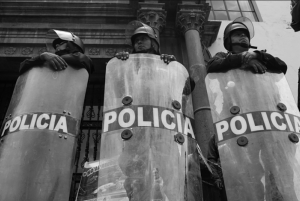 ancestors were not held as slaves would much rather the topic go away. Unfortunately, we know that just because a topic is difficult or uncomfortable does not mean it should not be dealt with.
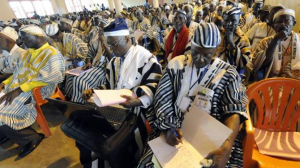 The right to reparation is a well-established principle of international law. The International LawCommission affirmed this principle in its 53rd Session when it adopted the draft articles on responsibility of states for internationally wrongful acts. The right is also firmly anchored in international human rights treaties and declarative instruments, some of which are: the Inter-American Convention on Human Rights (Articles 25, 63 (1), and 68); the Universal Declaration of Human Rights (Art 8); the International Covenant on Civil and Political Rights (Arts 2(3), 9(5), and 14(6)). Jurisprudence has also added to the legitimacy that reparation has a place in international law. See ruling of the Inter-American Court of Human Rights in the Velásquez Rodríguez Case, Serial C, No 4 (1989), par 174, also in the Chorzow Factory Case (Ger v Pol), (1928) the Permanent Court of Arbitration opined: “It is a principle of international law that the breach of an engagement involves an obligation to make reparation in an adequate form.”
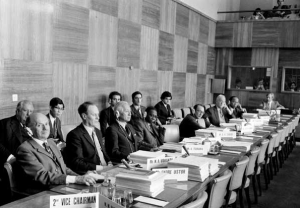 For those who argue about precedent in international law, this was clearly adduced by Professor Beckles of the University of West Indies, who noted that the first reparation case was that of Haiti where, under an 1825 ‘agreement’, Haiti was forced to pay 150m gold French francs (about US$21 billion in today’s money) to France. The second historic reparation case occurred in 1834, when slave masters argued that the freeing of enslaved people by British legislation was a violation of their property rights and demanded compensation. Germany paid for the Holocaust. The Americans paid the Japanese for loss of property in World War II (1939-1945). The British recently paid £19.9m in compensation for Kenyans (Mau Mau) who were tortured in the 1950s and 60s rebellion.
 Brazil is hardly the only country where this takes place; others include India, the world’s largest democracy, South Africa, the Dominican Republic and Iran. These countries all have judicial systems, and most suspected criminals are formally charged and appear in court. But the courts are slow and underfunded, so police, under pressure to combat crime, employ extrajudicial methods, such as torture, to extract confessions.
 The truth is that human rights law has failed to accomplish its objectives. There is little evidence that human rights treaties, on the whole, have improved the wellbeing of people. The reason is that human rights were never as universal as people hoped, and the belief that they could be forced upon countries as a matter of international law was shot through with misguided assumptions from the very beginning. The human rights movement shares something in common with the hubris of development economics, which in previous decades tried (and failed) to alleviate poverty by imposing top-down solutions on developing countries. But where development economists have reformed their approach, the human rights movement has yet to acknowledge its failures. It is time for a reckoning.
 But while governments all use the idiom of human rights, they use it to make radically different arguments about how countries should behave. China cites “the right to development” to explain why the Chinese government gives priority to economic growth over political liberalisation. Many countries cite the “right to security,” a catch-all idea that protection from crime justifies harsh enforcement methods. Vladimir Putin cited the rights of ethnic minorities in Ukraine in order to justify his military intervention there, just as the United States cited Saddam Hussein’s suppression of human rights in order to build support for the Iraq war. Certain Islamic countries cite the right to religious freedom in order to explain why women must be subordinated, arguing that women must play the role set out for them in Islamic law. The right of “self‑determination” can be invoked to convert foreign pressure against a human-rights violating country into a violation of that country’s right to determine its destiny. The language of rights, untethered to specific legal interpretations, is too spongy to prevent governments from committing abuses and can easily be used to clothe illiberal agendas in words soothing to the western ear.
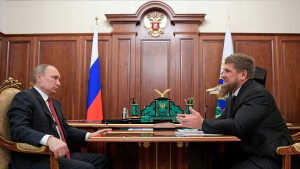


 And as the Financial Times has reported: “[Kurdistan’s] deposits are huge, amounting to roughly a third of those in Iraq, where one in ten of the world’s accessible barrels are to be found. Kurdistan is among the cheapest places to drill for oil on earth. The total cost per barrel – a measure that includes exploration and extraction spending – is around $12, compared with about $50 for US shale, [according to] Will Forbes, head of Oil and Gas at research advisory Edison in London.”
 They interviewed Ashti Hawrami, the Kurdistan Region’s Minister of Natural Resources, who argues that “The issue is not technical, it is money and political.” Hawrami maintains that despite the recent insurgency, foreign oil companies have come back to the region after a brief hiatus. He hopes for production of between 800,000 and 850,000 barrels of oil in 2015. But says a total of 600,000 will keep the regional government afloat. The Turkish Government and foreign oil companies have all loaned the Kurdish Regional Government money in return for oil guarantees.